Pages

Friday, April 6, 2012

My massively nerdy paper on pie crust

So, here it is... 15 pages on fat and pie crust. Hope you like it!

THE EFFECT OF TYPE OF FAT IN PIE CRUST
Amy Tobey
FCSC 212: Foods II
April 9, 2012
The old saying goes, “There’s nothing more American than apple pie.” Being an American girl, I have to say pie is one of my favorite baked foods of all time. The part I like most, however, is the crust. Therein lies my dilemma. I have been experimenting with different ways to make pie crust for about a year now, and up until the time of this experiment, I had not come up with an acceptable crust.
This experiment, then, has been in the works since this summer when I asked my boss how to make a pie crust and used olive oil instead of shortening. The next time I made the crust, I used butter. The results were entirely different. The main points of this experiment for me personally are 1) to demonstrate that there is a difference between fat used in a recipe of pie crust and the outcome of said crust, 2) to find out why this difference exists, 3) to finally produce an acceptable pie crust and 4) to find the superior fat to use when preparing the crust of a pie. Having gone through with the experiment, I feel confident that I have my answers to these questions.
Pie crust, or pastry, has certain standards that are to be observed to obtain the best possible quality. According to Betty Crocker’s New Cookbook, “Perfect pastry is golden brown and blistered on top, [has a] crisp brown undercrust, tender [meaning it] cuts easily and holds its shape when served, [and is] flaky and crispy.”[1] By changing the fat of the pastry, I altered the flakiness, the tenderness, taste, and color of the pastry. Color and taste are depended on the type of fat because each fat has its own flavor and color naturally. Color can also be added to the pie crust before baking by brushing it with milk, moistening it with water and sprinkling it with sugar, or by mixing an egg wash and brushing the crust with it.[2] To prevent excessive browning, pies can covered with aluminum foil which is removed 15 minutes before the end of the bake time.[3]  How the type of fat determines flakiness and tenderness will now be discussed in further detail.
 “The proportion of fat is probably the most important determinant of quality in pastry especially in creating flakiness. Large amounts of fat are required to produce a flaky crust.”[4] Flakiness is determined by the size, firmness and ease of spread of fat particles.[5] “When fat is cut in small, cold pieces that are incorporated into the dough without being creamed or absorbed by the flour, the fat will then melt during baking, and leave empty spaces where steam may collect to leaven and lift the layers of the dough.”[6] The air pockets left make the pastry flaky with more air pockets (or blisters) giving flakier texture.[7] The type of fat used will determine the flakiness of the crust as well.[8] “Firmer, plastic, 100% fats such as hydrogenated shortenings and lard produce the flakiest pastries… Shortening is softer and more pliable than cold butter, so it coats the flour more easily and can be rolled out even when refrigerated.”[9] The water content of butter can cause more gluten formation when it is used in pastry, but high-quality butters have less water content, making them most desirable for use in pastry.[10] Butter’s flavor lends itself to pastry making, yet it tends to harden when refrigerated requiring more effort to roll out the dough.[11] “Oil is the least desirable fat for making flaky pastry because it coats each flour particle, resulting in an extremely tender but mealy (grainy) texture.”[12]
Tenderness is another very important quality in pastry. “Tender products are easily crushed or chewed; they are soft and fragile.”[13] The same factors that affect flakiness of a crust contribute to tenderness, namely the type of fat chosen, how much of it is used, how much the dough is handled, and the temperature of the dough and fat.[14]  “Increasing the water in a given recipe decreases the tenderness of pastry.”[15] This is significant when thinking about the water content of butter. One could conclude from this statement and what has been said above about butter that a pastry made with butter will be less tender than one made with pure fat. If the fat is increased a more tender pastry results.[16] “Matthews and Dawson (1963) found a significant correlation between flakiness and tenderness in pastry. Pastries that scored high in flakiness also scored high in tenderness.”[17] Using oil or melted fat is expected to increase the tenderness of a pastry while decreasing the flakiness because the fat is completely dispersed throughout the dough, leaving no room for blister formation.[18] Finally, “folding and rerolling pastry increases flakiness, although it decreases tenderness and may cause the flakes of dough to be closer together or more compact.”[19] This is due to the fact that the more one handles pie dough, the more the dough will hydrate and the more gluten will form.[20]
I used four different kinds of fat in this experiment. Each has its own unique qualities that contributed to the outcome of the pie crust it was used in to produce. For my experiment, I used Crisco, olive oil, butter, and coconut oil. Oil is a liquid at room temperature, while butter and Crisco are said to be plastic fats. Plastic fats contain both liquid oil and solid triglyceride crystals with the consistency depending on how many solids to liquids the fat contains: more liquids result in a softer fat, and more solids make the fat harder.[21] “The liquid phase acts as a lubricant, enabling the solid crystals to slide past one another, and thus conferring moldability on the fat.”[22] Palm oil has a very strange way of acting, being solid when cold and liquid at room temperature.
Crisco contains soybean oil, fully hydrogenated palm oil, partially hydrogenated palm and soybean oils, mono and diglycerides, TBHQ and citric acid (antioxidants). Because it contains hydrogenated ingredients, a discussion of the hydrogenation process is in order. “Hydrogenation is the process of adding hydrogen to unsaturated fatty acids to reduce the number of double bonds. The purpose of hydrogenation is twofold: to convert liquid oils to semisolid or plastic fasts, to increase the thermal oxidative stability of fat, thus shelf life.”[23] Being easily workable, they are manufactured to be flavorless, have a high range of plasticity, contain 100% fat, and have the greatest shortening power of all fats.[24] Because Crisco is the standard in baked goods, I decided to use this as my control group for my experiment. I expected to get a very flaky crust with good color, bland taste, and adequate tenderness.
The olive oil I used in the experiment was virgin olive oils from Italy, Spain, Greece, and Tunisia. “Olive oil is 75% monounsaturated.”[25] “Monounsaturated [fat] is liquid at room temperature and is found chiefly in plants.”[26] They have a health advantage because they reduce serum cholesterol and the appearance of coronary heart disease. [27] Based on the previously mentioned research, I would expect this fat to produce the most tender pie crust with a mealy texture and be the least flaky of all due to the oil molecules coating all of the flour particles in the pie crust.
My third variable of fat was coconut oil. The particular type of coconut oil I used was described as 100% mechanically (expeller) pressed naturally refined organic coconut oil by its label. “Fats and oils derived from plants grown in tropical areas of the world are referred to as tropical fat or oil. They are typically high in saturated fat content and contain an appreciable amount of short-chain fatty acids.”[28] Coconut oil has the highest amount of saturated fat, weighing in at 90%, making it stable against oxidation and hydrolysis.[29] Honestly, I did not know what to expect with this particular fat. Because it is solid when cold and oil at room temperature, I knew that if the dough got warm at all, I would be looking at a very tender, mealy pastry. However, if I kept it cold throughout the process, I might end up with a stellar pie crust. This was my wild card of the experiment.
Finally, I used salted butter with ingredients of cream (milk), and salt. “Butter… contain[s] water and milk (20%) in addition to a variety of fat or oils (80%). Therefore, butter… [has] less shortening potential than lard, hydrogenated shortening, or oil.”[30] Butter will hydrate the starch found in flour, causing it to swell and toughen the dough.[31] Because of this factor, I expected the pie crust made from butter to be less flakey, a little tenderer, and more flavorful than the pie crust made from Crisco. I was curious to see in the taste test if the flavor of the butter would cover over the diminished flakiness of the pastry.
Experiment: Pie Crust
In order to see if the type of fat contributes significantly to the overall texture, taste, and mouth feel of pie crust, I am going to change the type of fat used in a recipe of pie crust. My control group will be using shortening, and I will experiment by using butter, coconut oil, and olive oil. I am choosing butter because I use it a lot in my own cooking instead of shortening, coconut oil because it is a peculiar beast and I’d like to see how it will perform, and olive oil because the text book made such a big deal about how you get a totally different result with oil than solid fat in pastry.
Recipe Used in Experiment

¾ cup flour
1/8 teaspoon salt
1/3 cup of shortening, butter, coconut oil, or olive oil (depending on group)
1 tablespoon beaten egg
1 tablespoon and ¾ teaspoon ice water
¾ teaspoon vinegar

Combine first three ingredients until shortening is the size of peas. Blend last three ingredients and add to dry. Roll into a ball, refrigerate for at least 1 hour. Roll out dough between two sheets of waxed paper. Transfer to baking sheet lined with parchment paper. Dock dough. Bake 10 minutes in 475 degree oven.
I took notes on how the recipe came together for each variant of fat used. While I used the same recipe for each kind of fat, altering only the type of fat used, I found that the process, along with the results, were as different as the fats used to make them.
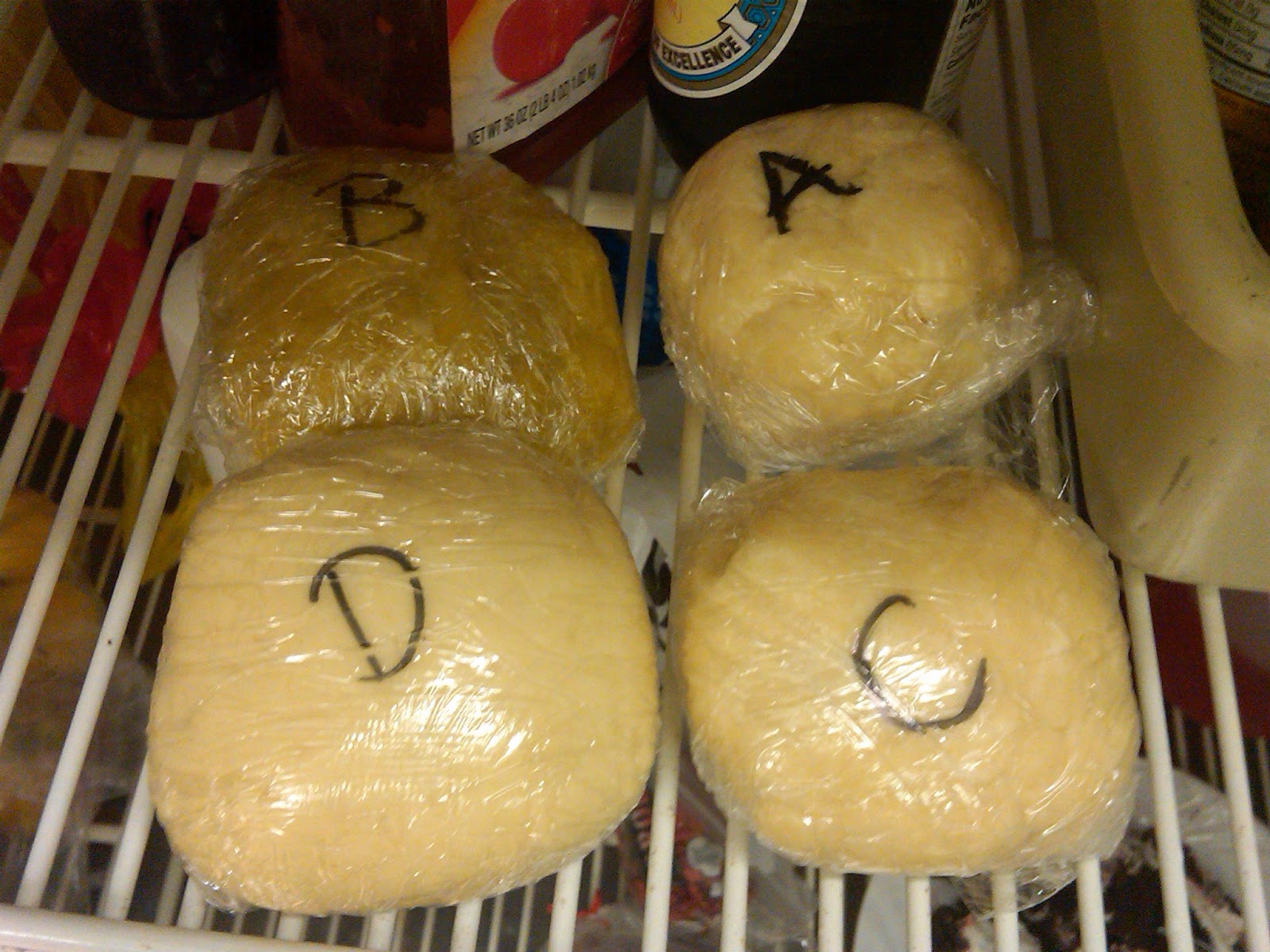
Pie Crust A was made with Crisco. When I cut the Crisco into the flour mixture, I got pea sized particles. When I added the wet ingredients to the fat mixture, silky soft dough formed that had lots of volume. After refrigerating for an hour, Pie Crust A rolled out beautifully, evenly, and flake formation was observed even at this stage in the process. A small amount of the dough stuck to the waxed paper. After baking, I had a beautiful, flaky crust with bland flavor and lightly browned edges.
For Pie Crust B, I used olive oil. The cutting in process produced a green, pasty liquid in the bowl. The product turned from paste into dough when I added the liquid mixture to it, but the dough was very soft and dense. After refrigeration, the oil oozed out of the plastic wrap. This made for easy rolling out because none of the dough stuck to the waxed paper. Before I put it in the oven, it had a green tint to it, was oily, and there were no flakes visible. After baking, the crust was very oily still; the oil bubbled out of the dough and coated the top of the crust. A light golden brown color was achieved, as was a shine from so much oil. This pie crust also crumbled when I tried to cut it.
Challenges were presented by Pie Crust C in which I used coconut oil in the preparation process. Things went relatively smoothly with the cutting in process as pea sized particles formed. The adding of liquid formed silky soft dough that was only slightly denser than Pie Crust A. But when I took it out of the refrigerator after an hour to roll it out, Pie Crust C was hard as a rock. It broke in half. I had to leave it out for a few minutes to soften because it crumbled when I tried to roll it out straight from the fridge. After this fiasco, it stuck a little to the waxed paper when I rolled it out, but I also observed flake formation already. When Pie Crust C final emerged from the oven, it was the lightest color of all the pastries for the day, and had a soft white tint to it. Also, it was fluffier than the rest of the pastries, and held together well.
The final variation I used for fat was butter which I incorporated in Pie Crust D. When I cut the fat into the flour, a creamy paste resulted. Adding the liquid to the fat mixture gave me dough that resembled cookie dough. The dough was very soft but dense. The olive oil dough was the only dough denser than this one. After an hour of refrigeration, the dough was difficult to roll out between the two sheets of waxed paper; however it had a smooth texture when I had finished this process. Instead of seeing a lot of flakes like I would expect from pastry dough, I felt I had rolled sugar cookie dough on my hands. After baking, the pastry came out golden brown, slightly less flaky and tenderer than Pie Crust A and C, and held its form nicely.
For the tasting section, I had several surveys my classmates filled out for me. I also had my land lady, Dee, and three chefs from Bon Appétit try my pie crusts. Dee liked the olive oil pastry best and did not like the coconut pastry at all. The chefs unanimously voted for the butter pastry as the best.
A copy of the survey used will follow the chart demonstrating the taste test results. Each category of external texture, internal texture, flavor, and color was ranked from 1 to 5 by participants, 1 being I hate it and 5 being I’m not sharing. This was a blind tasting because I wanted to get genuine responses based on how participants perceived the finished product and not the ingredient that went into its formation. (DEAREST BLOG READERS, I COULDN'T FIGURE OUT HOW TO GET THE CHART IN HERE. SORRY!)

Pie Crust Assessment
External Texture is Flaky: Nice layers developed throughout and crisp
Internal Texture is Tender and Blistered: Gives way easily to the tooth and nice air pockets throughout
Flavor is even: not overpowered by fat by complements filling
Color is nice Golden Brown: not burned

Please check most appropriate box based on standards above:


Pie A
I hate it 1
Take or leave it 2
I like it 3
I want more 4
I’m not sharing 5
External Texture


Internal Texture


Flavor


Color


Pie B
I hate it 1
Take or leave it 2
I like it 3
I want more 4
I’m not sharing 5
External Texture


Internal Texture


Flavor


Color


Pie C
I hate it 1
Take or leave it 2
I like it 3
I want more 4
I’m not sharing 5
External Texture


Internal Texture


Flavor


Color


Pie D
I hate it 1
Take or leave it 2
I like it 3
I want more 4
I’m not sharing 5
External Texture


Internal Texture


Flavor


Color


Additional Comments:
According to the survey results, Crisco did the best as far as external texture goes. This was followed closely by butter, then coconut oil, and lastly olive oil. For internal texture, Crisco was again the crowd favorite followed by butter, coconut oil, and olive oil. In the flavor category, one participant could not detect flavor among any of the pastry variations and simply wrote, N/A. I substituted this with a score of 1 across the board. Butter was the leader in flavor, followed by coconut oil, then Crisco, and finally, olive oil. In the color category, one participant noted the yellowish color of the olive oil pastry. Butter won in this category followed by Crisco, coconut oil, and olive oil. Butter was in the top two performers in all categories, Crisco was in the top two in three out of four categories, and coconut oil was in the top two in one category. Olive oil was the bottom performer in all categories.
Percentage wise, out of 45 possible points, butter received 64% in external texture, 66% in internal texture, 68% in color and 77% in flavor. Use butter if you want a flavorful and beautiful looking crust. Crisco received 73% in external texture, 71% for internal texture, 53% for taste and 75% for color. Crisco is the standard for pie crust because of how well it performs with the texture elements associated with high quality pastry. Coconut oil performed with a 62% in external texture, 62% in internal texture, 60% for flavor, and 68% for color. If all you are concerned about is taste in your pie crust, coconut oil is second only to butter in this category. Finally, olive oil received a 51% in external texture, 55% for internal texture, 40% for flavor, and 48% for color. While oil crusts can be used in savory pie dishes, in this particular experiment olive oil proved to be an epic fail. Any option would be better than using olive oil for crust making.
The results of the experiment agreed unanimously with the expected results from the science data. Crisco is the standard for pie crust because it is 100% fat and that creates the layering effect so necessary to the blistering and tenderness of pastry. Butter’s taste and ability to brown make it an acceptable substitute in pastry crust making, however it cannot compete with Crisco’s textural development in the pastry because of the water molecules it possesses. While coconut oil has a taste all its own and created a fluffier pastry, many participants did not like its textures and color as much as Crisco or butter. Finally, the olive oil pastry performed poorly, as expected. Not only did it create a mealy texture like the texts said it would because of the coating of the flour molecules, it had a strange color throughout the process and a heavy taste because of the type of oil used.
This experiment has taught me that not all fats are created equal. Each has its own part to play in baking, and each one will change the outcome of the final product dramatically. My personal favorite was coconut oil in pastry, but I also realize that different people have different preferences when it comes to baking. If the standard is to be upheld, then Crisco is the way to go. I also learned that butter covers over a multitude of sins simply because it tastes so delicious. However, there is a reason why most pie crust recipes are written with shortening as the main fat. Nothing competes with 100% plastic fat when it comes to giving pie crust its famous textures.


BIBLIOGRAPHY


Brown, Amy. Understanding Food: Princles and Preparation, Fourth Edition. Belmont, CA:            Wadsworth, Cengage Learning, 2011.
General Mills, Inc., Minneapolis, Minnesota. Betty Crocker's New Cookbook. New York:   Macmillan, 1996.
Pauline C. Paul and Helen H. Palmer, Eds. Food Theory and Applications. New York: John Wiley   & Sons, 1972.
Vaclavik, Vickie A. Essentials of Food Science. Gaithersburg, MA: Aspen Publishers, Inc., 1999.


APPENDIX: Experiment Pictures


The top picture shows the pastry dough’s texture before being refrigerated. The middle picture portrays the density of the various dough. They have not been moved from their position in the top photo. Finally, the picture on the bottom shows the pastry just prior to the taste test and sampling done in class.


[1] General Mills, Inc., Betty Crocker’s New Cookbook, (New York: Macmillan, 1996), 92.
[2] IBID, 91.
[3] IBID, 91.
[4] Amy Brown, Understanding Food: Principles and Preparation, Fourth Edition, (Belmont, CA: Wadsworth Cengage Learning, 2011), kindle location 18119.
[5] IBID, kindle location 18127.
[6] IBID, kindle location 18127.
[7] IBID, kindle location 18127.
[8] IBID, kindle location18133.
[9] IBID, kindle location 18141.
[10] IBID, kindle location 18141.
[11] IBID, kindle location 18141.
[12] IBID, kindle location 18141.
[13] Vickie A. Vaclavik, Essentials of Food Science, (Gaithersburg, MD: Aspen Publishers, Inc., 1999), 234.
[14] IBID, 234.
[15] Pauline C. Paul and Helen H. Palmer, Eds., Food Theory and Applications, (New York: John Wiley & Sons, 1972), 241.
[16] IBID, 241.
[17] IBID, 243.
[18] IBID, 243.
[19] IBID, 243.
[20] IBID, 243.
[21] Vickie A. Vaclavik, Essentials of Food Science, (Gaithersburg, MD: Aspen Publishers, Inc., 1999), 225.
[22] IBID, 243.
[23] IBID, 228.
[24] IBID, 234.
[25] IBID, 243.
[26] IBID, 243.
[27] IBID, 243.
[28] IBID, 227.
[29] IBID, 227.
[30] IBID, 233.
[31] IBID, 233.


Friday, March 16, 2012

CoDependent's Rules of Engagment

So, here I am world! I have just gone through another break-up. I will spare you the details. It was the best relationship of my life, and I learned a lot. He was kind, sweet, enthusiastic, a great listener, and ultimately, one of my best friends for the past 2.5 years. But, it's over now, and my friends and family have asked me, "Have you learned anything?"

Well, I'd like to answer that question with a resounding, YES! First of all, this person was a safe choice. I learned about communication, honesty, and how to let someone else into my world. These are all huge things for me because I haven't let many people in. And sometimes, even when I have let them in before I will shut them out if I feel unsafe. I've learned that even if it feels unsafe, I need to talk and resolve the conflict because I'm shutting my best allies out if I don't at least try to see it from their point of view and come up with an acceptable compromise. Also, I don't have all the answers.

I also learned that people are not projects. It's not my job to fix them. I have some very close friends who have come to me for advise before, disagreed with me, and I mourned the fact instead of letting them make their life choices and become the beautiful people full of diverse experiences, that they were meant to be. I cannot take away free will. It's not my job to decide for them. I can be a part of the information gathering process, but anything beyond that is pretty arrogant of me.

Also, I learned that I do have boundaries! Yay! Finally! There are things I am ok with in relationships, and things I am not. My sister Dot gave me her short list the other day. Well, I really liked the idea of it, and I thought I would just keep it as she gave it to me, but I'm finding I have different values than she does. That's fine. But I do need some sort of a standard to go by when getting into relationships.

So, instead, I've come up with five Rules of Engagement. I have a tendency to get into really codependent relationships, and for the first time, I'm not even interested in a relationship. That's why I am setting standards now. I want to get married one day, and even though I think I'm done with relationships for a while, I need to be able to recognize the right one when he comes around. Enter Rules of Engagement. So, for your entertainment, help developing your own, and general well-being, I give you my rules and why.

  1. No More Boys. I have a tendency to go for the guy who has not yet grown up. Don't get me wrong, they are great to party with, talk to, even date. But, I'm 28. I am finding that I want a real grown up relationship. I like to dream, but I want someone who can back up what they say when we dream together and follow through. If a guy doesn't know who he is and what he is about, he's still a boy. And I am no longer a child. I am a woman. So no more boys.
  2. Be More Picky. We've all met him. That guy who is ALMOST perfect. He does all the right things except, he lives at home with his mom. Or he doesn't have a job. Or he has really bad people skills. It's that one thing that you know is wrong and you aren't quite comfortable with, but if you pass him up, maybe no one else will come along. OR maybe you're a bad person for judging him. The problem is, this is settling. We all have baggage, hang-ups, and issues. But this isn't always a deal breaker. Can you live with this for the rest of your life if it never changes? If the answer is yes, then awesome. But most times, for me, the answer has been no, and I keep going in the relationship anyways because I hate being alone. Well, I'm no longer willing to deal with deal breakers just for the sake of companionship. That's what friends are for. A partner is just that, someone you can rely on in any situation, someone who's issues aren't going to sabotage your well-being, and someone whom you are committed to walking through life with. If it's not there, I'm not going to settle for it anymore. 
  3. I Don't Call Men. I have a major phone addiction. If I don't hear from my honey every day, I'm on that phone finding out what's wrong. The problem is, that means there is no trust that my man is going to be faithful or hold up his end in the relationship. Plus, it doesn't give him the opportunity to pursue me. And I'll admit that I'm old fashioned. I want to be pursued. I want flowers, and him to pay for the date, and to be picked up when we go out. I don't want to be the one planning everything. I want my man to have the initiative to take matters into his own hands and come get me. So, I don't call men anymore. If they are interested, they can call me. Otherwise, they are "just not that into me."
  4. If He Can't Take Care Of Himself, He Is NOT Able To Take Care Of Me. Confession: I have the mommy mentality. I will go way beyond where I should have gone to help my friends, significant other, or even strangers out. But when I think about being with someone for the rest of my life, I want someone I don't have to tell to get a job, to eat, to bathe, to do the basics in life. I really don't care about socioeconomic background. No one wants to be poor, but sometimes legitimate circumstances put people in this position. And yes, they can turn it around. It just takes time, luck, and a good economy. These are realities we've been facing in the economic downturn of our country. Some people who are hard workers have lost everything. However, those people still are finding a way to make their lives work, to take care of the everyday-ness of life. This is what I mean by this rule. How can someone who cannot take care of themselves be a proper partner? The answer is, he can't. And asking him to IS asking too much. Those are choices people have to make for themselves because they love themselves. I can't make someone love himself anymore than I can make him love me.
  5. I Am Worth Taking Care Of, So I Need To Take Care Of Myself. Finally, I will neglect my own well being for the sake of a cause. That cause can be personal, spiritual, career related, educational, or familial. But it's not healthy. Don't get me wrong. There are times in our lives when a crisis happens and other things need to get put aside for a time to really focus on the issue and resolve it. But living in a place of crisis, never having enough time for myself, and not resting are really self destructive behaviors. What's the point of doing well in school, work, or helping other people out if there is no joy in it? Self care is not the same thing as selfishness. Rather, if I want to be around for the long haul, then I need to make sure I am ok. By not saying no to others because I need to care for myself, I am really saying I am not valuable. And, as a Christian, I believe I was made uniquely female in God's image. So I'm basically saying the female heart of God that I represent is not valuable, no worth fighting for, not worth preserving, nurturing, and loving for it's beauty. I don't believe this, so I'm going to stop living this way.
Well, I hope this helped you understand me a bit better and maybe understand yourself too. I'm sorry it's not food related, but life is more than food. This guy has been a HUGE part of mine, and helped me come to these realizations. I'm so thankful that God put him in my life for the time he was there, and I'm excited about this season of my life. I leave you with a quote from askangie.com.

"This season of your life is not about whether to date this guy. Really, it's about discernment and boundaries. With the right boundaries, you can more easily discern what God is saying to you."

Wednesday, March 7, 2012

Lemon-Berry Tart

On Mondays and Wednesdays, I have FoodsII at George Fox University. We drive the other classes in the Family and Consumer Sciences Building known as Lemmons nuts with the delicious smells that pour out of our kitchen. Today was no exception.

FoodsII is a baking course true to the home ecconomics style of learning. Most of our recipes are geared toward the begener as over half of the people in the class are taking the course as an elective. Today we made pies. As I was putting mine together, two young men walked by the window, looked in, and did the dance of degredation. Later, after their class had let out, they came by and got extra slices of the beautiful pies we made.


Well, I posted this picture on my facebook page, and it happened. I had three posts on it before I even left class. One was from a dear friend requesting the recipe. I've given it out three times already via facebook and the day's not even done. So, if you're looking for something to remind you that summer is just around the corner and that there truly are things worth celebrating, look no further. I have a recipe for you!

Lemon-Berry Tart

To make crust:
1 1/2 cups flour
1/4 cup brown sugar
2/3 cup Butter, softened
1 egg
Heat oven to 400. Mix all ingredients until dough forms. Press firmly and evenly against bottom and sides of ungainly 11 inch part pan. Poke bottom. Bake 10 to 12 minutes or until light brown. Cool.
To make Microwave Lemon Curd:
6 Tablespoons butter
3/4 cup sugar
2 Tablespoons grated lemon rind
1/4 cup lemon juice
3 eggs, Beaten
Place butter in large glass measure bowl. Microwave on high power for 10 seconds or until butter is soft but not melted. Stir or whisk in sugar, lemon rind and juice. Add eggs and blend well. Cover with waxed paper and microwave on high for 3 minutes, stirring every minute. Cover and cool. Mixture will thicken.

To make filling:
1/2 cup lemon curd
1 8-ounce package cream cheese
2 cups berries or other sliced fruit
Beat lemon curd and cream cheese until smooth. Spread in crust. Refrigerate at least 1 hour. Arrange berries over lemon mixture just before serving. Sprinkle with powdered sugar (or regular) if desired.

That's it! I hope your tart comes out amazing and that you enjoy the simplicity of putting together something amazing, delicious, and fun!

Until next time, happy eating!

Tuesday, February 28, 2012

How to Cope when your child says NOPE!

This paper I wrote about picky eating habits among toddlers. I just finished it today! I hope you like it and learn some new strategies when your child just will not eat!

Picky Eating, Zinc, and Developing Food Appreciation in Toddlers
Amy Tobey
FCSC 430 George Fox University
My sister Sarah is very precious to me, someone whom I look up to and admire for her courage, tenacity, and willingness to go the extra mile for those she loves. She has her share of difficulties in life though. One of them is that her son, now four, is a very picky eater. I’ve watched him refuse to eat almost everything except sugar. His little brother who is two, on the other hand, sometimes eats so much so fast he makes himself sick. He really likes food. I know the problem that my sister has faced with her four year old has affected the way she deals with food in general as well as her quality of life. How common is this problem? What are the underlying causes of picky eating? And is there anything a parent, like my sister, can do to help coax their little one to eat a wider variety of foods?
According to Lisa Fields of WebMD, “one in five preschoolers is a picky eater (2010).” The causes of eating problems are as varied as the children who have them. According to Effective Parenting for the Hard-to-Manage Child,
            “The child may have problems sucking, chewing, and swallowing, making the process of   eating difficult and exasperating for both parent and child. Some children are so     hypersensitive to touch on their faces and in their mouths that certain food textures are             aversive. There are also children who simply refuse to eat, hate sitting at the table, or     have no desire for food.” (DeGangi and Kendall, 2008, p.47)
Problems can occur as early as the first introductions of food in the form of breast milk for those children who have sensory issues, making them hypersensitive to touch, especially in and around the mouth area (DeGangi and Kendall, 2008). This problem, known as tactile hypersensitives may cause the child physical pain when feeding, resulting in gagging, pulling away from food sources, and rejecting food of certain textures altogether (DeGangi and Kendall, 2008).  This problem can persist when solid foods are introduced to young children.
             “A common problem arising from oral tactile hypersensitivities is rejection of different     food textures. This usually emerges around 9 months of age when table foods are offered.       Some infants develop a preference for food with a firm, smooth texture, such as crackers    or crunchy cereal. When this occurs, the infant is usually seeking deep pressure to the    mouth by selecting foods that allow him to bite. Foods with uneven textures, such as             applesauce with sliced bananas, are often rejected.” (DeGangi and Kendall, 2008, p. 51)
Children who refuse to eat often do so because they are learning to assert their will (Fields, 2010). The caregiver may be not paying attention to the child’s cues that he is full, or may feed a passive child too much food (DeGangi and Kendall, 2008). Children then become upset at their caregiver and express their need to be independent and care for themselves through food intake or refusing to eat (DeGangi and Kendall, 2008). If the behavior persists to the point of causing failure to thrive, the child will need to be evaluated by a multidisciplinary team to determine underlying causes of food rejection and help develop a plan for parents to overcome this disruption in nutrition (DeGangi and Kendall, 2008). This analysis of the child is especially important because an eating problem can often be the first sign of a chronic condition (Brown, 2011). “Examples of such conditions include gastroesophageal reflux, asthma (pulmonary problems in general), developmental delay, cerebral palsy, attention deficit hyperactivity disorder, and autism (Brown, 2011, Kindle location 11191).”
There are also children who become confused by their body signals. “Many infants and children with feeding problems cannot tell when they are hungry or full. Some children may confuse being hungry or full with the need to eliminate. Problems of this type are common in children who have poor processing of the sensory receptors in the gut and colon (DeGangi and Kendall, 2008, p. 49).” Children have not had their bodies as long as adults, and learning how to handle them can at times be a frustrating process.
Most children, however, are very aware of when they are hungry and not. If a child has too many snacks and drinks before meal time, he may never be hungry enough to eat anything that is served for dinner (Fields, 2010). Also, parents who force their child to clean their plate or use food as a reward can derail this whole self-regulating ability of the child instead teaching the child to overeat or under eat (Brown, 2011).
While children can self-regulate how much food, they learn what kinds of foods to eat (Brown, 2011). This can cause a problem when children are put on a special diet or show food preferences, especially when it comes to meeting a child’s need for zinc (Brown, 2011). “Zinc is found in foods of animal origin. Plant sources of zinc include legumes, nuts, and whole grains (Brown, 2011, Kindle location 10828).” Zinc is an important nutrient in the overall development of the child, yet low intake of zinc was found in most toddlers between the ages of 12 and 18 months by the Feeding Infants and Toddlers Study 2002 (Brown, 2011).
            “Zn, the most abundant intracellular trace element, is involved in a multitude of diverse    catalytic, structural, and regulatory functions. For example, Zn is found in numerous             enzymes, is a component of biomembranes, is thought to be necessary for RNA, DNA, and ribosome stabilization, is involved in the binding of a number of transcription factors,       stabilizes some hormone-receptor complexes, and may have a regulatory role in tubulin             polymerization.” (Keen and King, 1999, p.228)
According to King and Kleen, clinical manifestations of  severe human zinc deficiency include growth retardation, delayed sexual maturation and impotence, hypogondism and hypospermia, alopecia, acoorificial skin lesions, other epithelial lesions (including glossitis, alopecia, and nail dystrophy), immune deficiencies, behavioral disturbances, night blindness, impared taste, delayed healing of wounds, burns, and decubitus ulcers, impaired appetite and food intake, and eye lesions. (1999) Keen and King tell us,
            “If it is accepted that impared growth velocity is the primary clinical feature of mild Zn    deficiency, several studies in Denver, Colorodo, provide convincing evidence. Apparently healthy children with low height-for-age percentiles were selected for a            double-blind, controlled trial of Zn supplementation…In all studies of these growth-           retarded children, Zn supplementation increased the mean height increment and height-    for-age percentile increment compared with   those of placebo controls.” (Keen and King   199, p. 230)

Environmental factors also have a huge effect on children’s eating patterns. If parents argue at the table, the television is on during meal time, or parents are dieting or picky themselves, children will sometimes refuse to eat (Fields, 2010). Children do not wish to be put in unpleasant situations with caregivers, can become distracted by the television, and watch parents’ eating habits to see what is acceptable and what is not at the table (Fields, 2010).
At this point, the parent of the picky eater may be beside themselves with the problem. Understanding it is useless unless strategies exist to help get parents through the difficult spots until the child begins to eat more regularly. Fortunately, there are things parents can do to help their child when it comes to establishing positive eating patterns. According to UCSF Benioff Children’s Hospital, the first step is to share responsibility when it comes to meal time (2011). Their website tells us, “As a parent, you have responsibilities for feeding your child. Your child also has responsibilities. You control what, where and when food is provided. Your child decides whether or not to eat the food, and how much to eat (UCSF Benioff Children’s Hospital, 2011).” By setting this standard, mealtime becomes less of a battle ground and more of a learning experience.
UCSF Benioff Children’s Hospital also urges parents to offer age appropriate food, avoid being a short order cook, respect eating quirks, and make meals pleasant (2011). Also, giving a toddler small portions and letting him ask for more is a better strategy than loading a plate with more food than the child can eat, establish eating patterns that allow the child to eat throughout the day without loading up on sugary beverages and empty foods, and setting enough time between feeding periods to allow the child to become hungry (Brown, 2011). The American Academy of Pediatrics recommends the child be given two cups of milk and four to six ounces of fruit juice, with water being utilized as a “thirst quencher” the rest of the time (Brown, 2011).
Other strategies to help the picky eater include:
            “Use treatment techniques…to desensitize the mouth. Desensitize the child to one food at            a time so as not to overwhelm him. If he eats only “white” foods, introduce a new white          food such as rice cakes. If there is aversion to smell, put a competing, pleasant smell in             the environment to override the smell aversion of the food. For example, burn a pleasant     smelling cinnamon- or peach-scented candle during meals. Begin with firm food textures   like crackers, steamed vegetables, or a piece of turkey. Expand the food repertoire,            beginning with smooth, soft textures like yogurts and applesauce before introducing uneven textures (banana chunks in yogurt).” (DeGangi and Kendall, 2008, p. 59)
Effective Parenting for the Hard-to-Manage Child also includes a Tool Sheet on pages 248 and 249 to help the caregiver establish proper eating habits for their child, a valuable resource for parents who have tried everything they know how to get their child to eat a varied diet, that I have included as an appendix in this paper (2008).
Dealing with a picky eater can be a frustrating power struggle that is often made worse by parents’ attempts to get their child to just eat something. It’s important to remember that a parent is not alone in this problem, that most children grow out of this stage, and that there are techniques that parents can implement to make meal time pleasant for everyone involved. And, as my sister Sarah can attest to, some things do get better with age. He four year old is starting to eat regular meals and is learning to appreciate a variety of foods. Picky eating is just another challenge that is a part of parenting.
Appendix: Tool 18. Food Rules
1.      Establish a schedule for mealtimes. If your child doesn’t eat a meal, avoid the temptation to try again in another hour. Stay with the schedule. There should be three main meals and two scheduled snacks (in the middle of the morning and afternoon). No extra snacks should be served, even if your child did not eat at one of the meals or snacks. This way your child will start to feel hunger and satiety and understand that when he eats, it satisfies his hunger. When it’s time for the next meal, talk about feeling hungry. After eating, talk about being full.
2.      Don’t worry about how much he eats at mealtime. When it’s clear that your child is finished, take away the food and, if your child cannot play unsupervised on the floor, try giving him something to play so you might be able to finish your own meal.
3.      Begin with food that your child can eat on his own, such as pieces of banana.
4.      Always eat something with your child. This socializes the mealtime and keeps him interested in eating too. Be careful not to diet when your child is in this program. He will get the message that you are avoiding foods to lose weight and will model your behavior.
5.      All meals are in the high chair or other appropriate seating. Ne eating should occur while your child roams the house or is in other places (i.e., bathtub, car seat, ect.).
6.      Take plates, food, cups, etc. away if they get thrown. Give one warning, saying clearly “No throwing!” If the throwing continues, end the meal.
7.      Let your child self-feed whenever possible. For younger children who cannot spoon feed, you can put out a small dish for baby to use while you feed him. Focus on foods that let your child self-feed and that are easy to manage in the hands or by spoon. For example, sticky foods such as applesauce or pureed bananas are easier than more liquid foods. Finger foods should be julienne strips of steamed vegetables or pieces of fruit or cheese that can be easily managed in the hand and mouth.
8.      Limit mealtime to 30 minutes. Terminate the meal sooner if your child refuses to eat, throws food, plays with food, or engages in other disruptive behavior. If your child is not eating, remove the food after 10 to 15 minutes
9.      Separate mealtime from playtime. Do not allow toys to be available at the high chair or dinner table. Do not entertain or play games during mealtimes. Don’t use games to feed and don’t use food to play with.
10.  Don’t praise for eating and chewing. Deal with eating in neutral manner. It is unnatural to praise someone for chewing and swallowing food.
11.  Don’t play games with food or sneak food into your child’s mouth.
12.  Withhold expressions of disapproval and frustration if your child doesn’t eat.
13.  Offer solid foods first then follow this with liquids. Drinking liquids will fill the stomach so that the child will not be hungry for solids.
14.  Hunger is your ally and will motivate your child to eat. Do not offer anything between meals, including bottles of milk or juice. The child may drink water if he is thirsty.
15.  Do the “special play time” (child-centered activity) before or after mealtime to give your child attention in positive ways.
16.  Emphasize mealtimes as a social, family gathering time. In this way, the focus is on socialization rather than worrying about how much your child is eating. Be sure the television is off.
17.  All caregivers need to agree to the program or it won’t work!
References
Brown, Amy (2011). Nutrition Through the Life Cycle, 4th Edition. Belmont, CA: Wadsworth.
DeGangi, Georgia A. and Kendall, Anne (2008). Effective Parenting for the Hard-to-Mange Child: A Sills Based Book. NY: Routledge, Taylor & Francis Group, LLC.
Fields, Lisa (June 6, 2011). What You Didn’t Know About Picky Eaters: Why your child is a picky eater and what to do about it. WebMD.com. Retrieved February 22, 2012, from http://www.webmd.com/parenting/features/feeding-a-picky-eater?page=2&print=true
Keen, Carl L. and King, Janet C (1999). Zinc. In  Maurice E. Shils, M.D., Sc.D., James A Olson, Ph.D., Moshe Shike, M.D., and A. Catharine Ross, Ph.D. (Eds.), Modern Nutrition in Health and Disease: Ninth Edition (pp. 223-240). Baltimore: Lippincott Williams & Wilkins.
UCSF Benioff Children’s Hospital (September 27, 2011). Picky Eaters. UCSFBenioffChildrens.org. Retrieved February 22, 2012, from http://www.ucsfbenioffchildrens.org/education/picky_eaters/index.html

What's the Difference Between Breast Milk and Formula Anyway?

So, I did this paper a while back, and just realized I did not post it. I learned a lot from the research, and I hope it passes on some helpful information to you too as you decide what to feed your baby. Remember, it is your child and your choice. Enjoy!


Composition of Breast Milk and Commercial Formulas
Amy Tobey
FCSC 430 George Fox University
Composition of Breast Milk and Commercial Formulas
While many consider breast milk to be the only option when it comes to feeding their newborn infant, I wanted to see what the differences were between what women produce naturally and what is being produced for them by manufacturers. What are the benefits of breastfeeding, and what are the benefits of a formula based diet? How do the nutrients provided by each compare? And is one just as good as the other, or is human milk still the best thing we can give to our newly born under normal circumstances?
Endorsed by multiple public health organizations, breast milk has long been hailed as the best food source for infants (Institute of Medicine, Committee on the Evaluation of the Addition of Ingredients New to Infant Formula Staff, 2004). “Human milk is unquestionably the gold standard for infant nutrition. Ideally, the healthy, term infant experiences direct, exclusive breastfeeding; the milk itself and the act of feeding provide many advantages…” (Biancuzzo, 2003, p. 431) Because of the over 200 components in breast milk, and the diversity of the human body, nutrients and calories in the milk vary greatly and can be linked with time of day, mother’s diet, how much time the feeding has taken, and how often the baby gets fed (Dewar, 2008).
It is important to note that the body changes the composition of the milk throughout lactation (Dewar, 2008). “Mature breast milk looks very different from colostrum, the milk produced in the first few days after birth. According to Guthrie (1989), each 100 mL of colostrum yields approximately: 58 calories, 5.3 g carbohydrates, 2.9 g fat, and 3.7 g protein.” (Dewar, 2008) The high beta carotene content in colostrum gives it a yellow hue (Dewar, 2008). Vitamin E and zinc are also very concentrated in mother’s milk at this time (Dewar, 2008). Throughout the first week, the fat and lactose content of the milk goes up while the protein, vitamin, and mineral content go down (Dewar, 2008). These changes continue until the milk reaches the mature state at 21 days after conception (Dewar, 2008).
One study of British moms showed their milk to be composed of 70 calories, 89.97 grams of water, 7.4 grams of carbohydrates primarily in the form of lactose, 4.2 grams of fat, and 1.3 grams of protein (Dewar, 2008).
The majority of the calories of breast milk come from fat, but this fat varies throughout the course of the day, as well as each feeding (Dewar, 2008). “The fat content of human milk increases during a single nursing session. As a full breast empties, the milk it produces becomes more fatty.” (Dewar, 2008) The more often a baby is fed, the higher the fat content of milk the breast will produce and the less likely the baby will suffer from vitamin deficiencies (Dewar, 2008). Long chain fatty acids may help in brain development, and one, docosahexanoic acid (DHA), helps to make the myelin sheath that insulates nerve fibers  (Dewar, 2008). Cholesterol is another important element of fat important for brain maturation that can only be found in breast milk as formulas have yet to include it (Dewar 2008).
Anyone who has experienced a baby spitting up dinner knows that milk separates in their little stomach.  Milk has two proteins responsible for this, casein (which turn into curds) and whey (Dewar 2008). 60% of the proteins in breast milk are whey while most infant formulas are high in curds making it harder to digest them (Dewar, 2008). Proteins not only serve to build muscles and bones, but also protect against pathogens as is the case with immunoglobulin A, a protein that defends against repertory issues, intestinal parasites, and bacteria (Dewar, 2008).
Breast milk also contains cholesterol, calcium, sodium, phosphorus, vitamin C, magnesium, zinc, pantothenic acid, iron, nicotinic acid, iodine, vitamin A and copper in addition to other vitamins and minerals, hormones, and agents to fight disease (Dewar, 2008). Clearly, breast milk is the perfect food for infants.
Busy mothers who want to take advantage of this high nutrient food are presented with a bit of a challenge. Although pumping  breast milk is an option for the busy mother who wants to give her child the best nutritional start possible, some nutrients do leave the breast milk with storage.“Milk that is not promptly fed to infants may be altered. First, storage can diminish some of the components of the milk. Even if milk is not exposed to extremes in temperature, exposing it to light results, within three hours, in a 50% reduction in riboflavin content and 70% loss of vitamin A. Second, pathogens may enter stored milk.” (Biancuzzo, 2003 p. 432) Clearly, it’s not ideal, but it will do in a pinch. Breast milk is best served straight from the mom to the baby with no stops in between.
While breast milk is a wonderful source of nutrients, even this may not be enough for a premature baby. The smallest of babies often times cannot get all the nourishment they need from their moms. In this case, a helping hand is required. “…Very-low-birth-weight (VLBW) infants will need to have mother’s milk “modified” in some way; for example, the infant may need expressed milk with an added fortifier. The fortifier may be added to either fresh or previously stored milk... Generally, fortifiers are indicated when the infant’s birth weight is less than 1500 g… When VLBW infants can tolerate human milk at greater than 100 ml/kg/day, supplementation using a human milk fortifier is started.” (Biancuzzo, 2003, p.432) In these cases, formulas work together with breast milk to keep the most vulnerable babies alive.
Unlike VLBW’s, most healthy full term babies will not need any vitamin supplements to enjoy the full benefits of their mother’s milk (Biancuzzo, 2003). However, supplementation may be necessary in the following instances. To prevent hemorrhaging in infants, a vitamin K supplement is administered at birth to all infants (Biancuzzo, 2003). Vitamin D deficiency is rare in breastfed infants, but can occur if the mother is not getting enough vitamin D herself and keeps the baby from exposure to the sun (Biancuzzo, 2003). Supplements of vitamin D currently are only available mixed with vitamin A and vitamin C in the form of drops (Biancuzzo, 2003). Vitamin B-12 deficiencies may occur in breastfed infants whose mothers are strict vegetarians, and vitamin B-1 deficiencies can also occur in babies whose moms are malnourished, especially in developing countries (Biancuzzo, 2003). Finally, 6% to 20% of breastfed babies are at risk for low iron stores after the first four months of breastfeeding (Biancuzzo, 2003). Although breast milk is generally lower in iron concentration than traditional formula, the iron in it is more bioavailable making the little go a long way (Biancuzzo, 2003).
Breast milk can be enhanced in overall proteins, vitamins, and fatty acids by taking prenatal vitamins, eating proteins, limiting saturated fats, eating fish, breastfeeding when the baby is asking for milk, and making sure each breast has been emptied before switching (Dewar, 2008). Also, there are some risks involved with breastfeeding. Aside from nutrient deficits already discussed, infants are at risk of being exposed to toxins from their mother’s milk including legal and illegal drugs, infectious pathogens, and AIDS (Institute of Medicine, Committee on the Evaluation of the Addition of Ingredients New to Infant Formula Staff, 2004).
Formula has been hailed as a more viable source than cow’s milk for infants in regards to its nutrient balance, and promotion of growth and development in infants (Institute of Medicine, Committee on the Evaluation of the Addition of Ingredients New to Infant Formula Staff, 2004). “Infant formulas do not duplicate the components of breast milk exactly;...the exact composition of breast milk has not yet been fully established. Rather the goal of infant formula is to match the function of breast milk in regard to meeting the infant’s nutritional needs… There is no set, immutable recipe for infant formulas. With the passage of time, new technologies immerge and new ingredients gain credibility.” (Pray, 2010)
Formula manufacturers change their recipes when prompted by science to do so to make their product more closely conform to the properties of breast milk (Institute of Medicine, Committee on the Evaluation of the Addition of Ingredients New to Infant Formula Staff, 2004). They do this by adding new ingredients, but this can be more complicated than one might guess (Institute of Medicine, Committee on the Evaluation of the Addition of Ingredients New to Infant Formula Staff, 2004). “In the simplest example, nutrients that are present in both milks may be present in different ratios. For many nutrients that do not interact chemically or compete for enzymatic or receptor binding sites, the relative amounts many not be important. However, in situations where there is competition for enzymes or receptor binding sites in the intestine, the relative proportions may have biological significance.” (Institute of Medicine, Committee on the Evaluation of the Addition of Ingredients New to Infant Formula Staff, 2004)
So what is infant formula made of and how does it meet the nutritional needs of the infant? Infant formulas come in liquids that are ready to use and powders that must be diluted with water or reconstituted in preparation for a feeding (Pray, 2010). Formulas are made of water, carbohydrates fat, protein, vitamins, minerals, and other ingredients (Pray, 2010). “FDA requirements specify minimum amounts of 29 separate nutrients and the allowable maximum amounts for 9 of the nutrients. Manufacturers usually set nutrient amounts that safely exceed the FDA minimums (without exceeding the maximum levels) and this practice allows the formula to meet its label claims up to its expiration date.” (Pray, 2010)
Water, carbohydrate, proteins and fats are essential nutrient sources for all humans. Formulas are 85% water regardless of whether they are ready to use or must have water added (Pray, 2010).  If too much water is added, the baby can end up with water intoxication, and too little water can result in diarrhea, dehydration, renal failure, gangrene of the legs, and coma (Pray, 2010). In light of this, it is important to prepare formulas according to the manufacturers specifications. Water should also be boiled for at least a minute before using in formula to make sure it is sterile (Pray, 2010). “Carbohydrates are a major source of energy for an infant’s brain, muscles, and other tissues. Lactose is the standard carbohydrate in milk-based formulas and lactose-free formulas contain such carbohydrates as glucose polymers, sucrose, corn syrup solids, tapioca starch, and modified cornstarch.” (Pray, 2010) Protein is present in milk based formulas as casein and whey while soy isolate is preferred for infants with special medical needs (Pray, 2010). Fat is given to babies on formula in the form of corn oil, soy oil, safflower oil, and coconut oils (Pray, 2010) However, there is some debate on the quality of the fat being received via formula. “Human milk fat is more bioavailable than the vegetable oils found in infant formulas.” (Institute of Medicine, Committee on the Evaluation of the Addition of Ingredients New to Infant Formula Staff, 2004)
There are other elements included in formulas as well. Vitamins and minerals are generally supplied according to what is recommended for a healthy baby and should not be supplemented unless the caregiver is instructed to do so by a medical physician (Pray, 2010). Prebiotics and probiotics are sometimes added to support good digestive health (Pray, 2010). “Carnitine must be added to all infant formulas to aid in fat oxidation. It is found naturally in formulas prepared from human milk and cow’s milk but must be added to soy-derived formulas…Nucleotides are found in breast milk , and are the fundamental building  blocks of ribonucleic acid (RNA) and deoxyribonucleic acid (DNA), as well as adenosine-5’-triphosphate (ATP). Their addition to infant formula may aid in the proper development of the gastrointestinal tract and enhance overall immune function.” (Pray, 2010)
Formula is harder for infants to digest than breast milk and therefore allows for longer periods between feedings (Pray, 2010). In addition to this, formulas are built so that all nutrients are included in their composition, eliminating the need for further supplementation (Pray, 2010). The FDA has strict standards for the formulas on the shelves in the US, and all manufacturers must meet these standards in order to have a piece of the market share in this country (Pray, 2010).
So, all the jargon aside, how do breast milk and formulas really compare when we are looking at the overall nutritional composition? A cow’s milk based formula is 8 to 9% protein, 41-43% carbohydrate, and 45-50% fat according to babyfoodchart.com’s nutrient composition of formula chart. The same website states that breast milk contains 6% protein, 40-45% carbohydrate, and 50% fat. The wonder of breast milk is that it changes with the child’s nutritional needs. The mother’s body senses what the baby needs and then produces that for the child. A formula cannot adapt like that because it’s not a living organism. It comes in a can. So, while both will feed a child and provide nutrition for the growth of the baby, the quality of food that comes from breast milk cannot be matched by a formula.


References
Biancuzzo, Marie (2003). Breastfeeding the Newborn: Clinical Strategies for Nurses. St. Louis, MO: Mosby.
Dewar, Ph.D. Gwen (2008). Nutrients and calories in breast milk. Parenting Science. Retrieved February 6, 2012, from http://parentingscience.com/calories-in-breast-milk.html
Institute of Medicine (U.S.), Committee on Evaluation of the Additional Ingredients New to Infant Formula Staff (Contributor) (2004). Infant Formula: Evaluating the Safety of New Ingredients.Washington D.C.: National Academic Press. doi: http://site.ebrary.com/lib/georgefox/Doc?id=10060399&ppg=63
Pray, PhD, DPh, W. Steven (March 15, 2010). Infant Formulas: Safe Alternatives to Breast Milk in Many Situations. USPharmacist.com. Retrieved February 6, 2012, from http://www.uspharmacist.com/continuing_education/ceviewtest/lessonid/106527/